
Are Laneway Houses Worth It in Toronto?
Laneway houses in Toronto can be worth the investment, offering potential monthly rental income of $2,500-$4,900 and average property value increases of $190,000. Although development costs range from $300,000-$500,000, you’ll see ROI metrics showing possible 24.5% annual returns over five years. They’re particularly valuable in desirable downtown Toronto neighborhoods, with over 2,400 laneways available for development. Comprehending the specific requirements and market dynamics will help determine if this investment aligns with your goals.
Key Takeaways
- Laneway houses generate substantial rental income between $2,500-$4,900 monthly, providing strong returns on investment in Toronto’s competitive housing market.
- Initial investment costs range from $300,000-$500,000, but properties typically increase in value by $190,000 after laneway development.
- Property owners can achieve 24.5% annual returns over five years, making laneway houses financially attractive long-term investments.
- Flexible financing options, including 90% refinancing and 30-year amortization periods, make laneway development more accessible despite high upfront costs.
- Toronto’s 2,400+ available laneways and projected home prices of $1.14 million by 2025 indicate strong market potential.
What Are Laneway Houses and Why They Matter

Toronto’s laneway houses represent a groundbreaking urban development initiative that’s transforming the city’s residential environment. These self-contained units, typically ranging from 600-1000 square feet, are built on existing residential lots adjacent to public laneways, maximizing underutilized urban space.
You’ll find these compact dwellings offer a strategic solution to Toronto’s housing crisis as they preserve neighborhood character. Since their 2018 introduction, they’ve proven instrumental in increasing housing supply across the city’s 300+ kilometers of laneways. They’re designed as complete living spaces, featuring kitchens, bathrooms, and separate living areas, often in two-story configurations. Like any construction project, accessing detailed information about laneway houses may require contacting property owners directly if you encounter security restrictions on informational websites. These innovative homes require a 0.9-meter-wide path from the street for essential access.
For property owners, laneway houses present a dual advantage: they generate rental income as they increase property value, making them a compelling investment in Toronto’s competitive real estate market.
Key Requirements for Building a Laneway House
As you build a laneway house offers exciting investment potential, you’ll need to meet several specific requirements before breaking ground. Toronto’s regulations guarantee these properties maintain neighborhood integrity whilst maximizing land use. These structures support eco-friendly designs through innovative green technologies.
Your property must abut a public laneway and be within 90 meters of a main road. You’ll need a minimum 400 sq ft footprint whilst maintaining utility connections. Homeowners should expect to invest a minimum of $300,000 for construction and related expenses. The two-point entry system requires both laneway and backyard access, with a 0.9m walkway minimum. Zoning compliance and proper permits are crucial for project approval.
The Real Costs of Laneway House Development
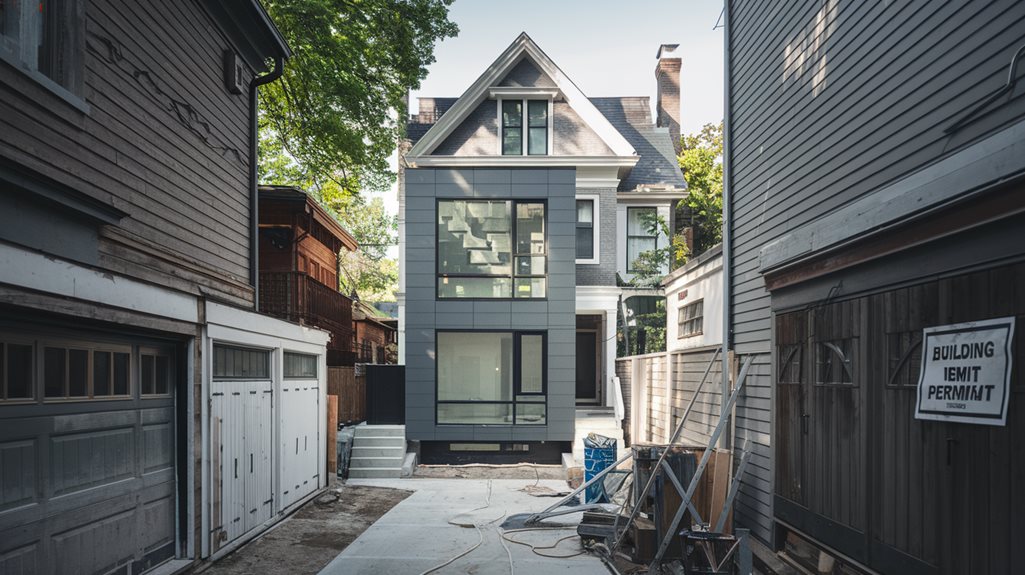
The cost of building a laneway house represents a significant investment, with Toronto projects typically ranging from $300,000 to $500,000. You’ll need to budget $350-$400 per square foot, meaning a 500-square-foot unit could cost up to $400,000.
Beyond construction costs, you’ll face design and planning expenses of $15,000-$25,000 for architecture and engineering, plus $5,000-$15,000 for permits and fees. Don’t forget to factor in $10,000-$30,000 for landscaping and site preparation, and $10,000-$50,000 for interior finishes. These versatile structures can serve as rental properties that generate additional monthly income. A well-designed laneway house can provide extra living space for hosting family or friends.
It’s essential to set aside a contingency fund of $20,000-$50,000 for unexpected expenses. Your final costs will be influenced by lot characteristics, material quality, and Toronto’s high labor rates. Larger projects can reach $700,000 CAD.
Investment Returns and Financial Benefits
Though building a laneway suite requires substantial upfront capital, the investment potential delivers compelling returns. You’ll benefit from monthly rental income ranging from $2,500 to $4,900, with two-bedroom suites commanding $3,000 to $3,200 in today’s market. This steady cash flow can offset your mortgage and property expenses. With the rising trend toward sustainable urban development, laneway houses efficiently utilize existing infrastructure while minimizing environmental impact. With average costs of $200,000 to $400,000, building a laneway house represents a significant but worthwhile investment.
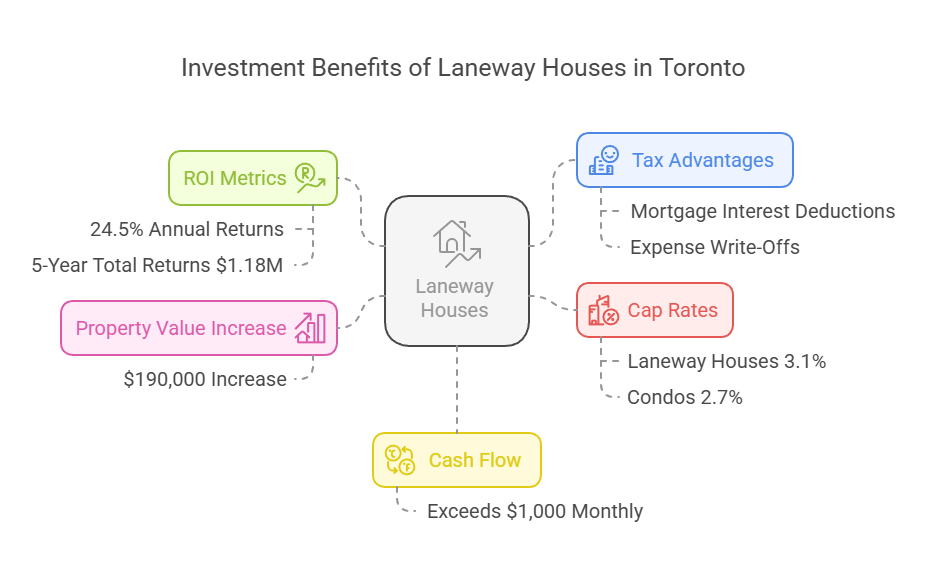
The ROI metrics are particularly attractive, with potential for 24.5% annual returns over five years. Your property value can increase by $190,000 through laneway improvements, during generating positive monthly cash flows exceeding $1,000 after refinancing. You’ll likewise enjoy tax advantages through mortgage interest deductions and expense write-offs against rental income. With cap rates outperforming condos (3.1% vs 2.7%) and total 5-year returns reaching $1.18M, laneway houses represent a strong investment vehicle in Toronto’s real estate market.
Navigating the Construction Process
Building a laneway house requires careful navigation through Toronto’s complex permitting and construction environment. You’ll need to assemble a qualified team including an architect, surveyor, and contractor with specific laneway suite experience. The process starts with obtaining proper zoning certificates and ensuring your property meets the 3.5m lane abutment requirement. Early communication with local planning departments is essential for project success.
Your construction budget should range between $500,000 to $700,000 CAD, covering everything from initial demolition to utility infrastructure. You’ll need detailed site plans, lot grading plans, and compliance with Toronto Fire Services requirements. The construction timeline typically spans less than a year, encompassing foundation work, framing, and system installations. Managing setback requirements of 1.5m and ensuring emergency services access from the main street are critical considerations in your planning process. The project may be eligible for forgivable loans of up to $50,000 through the Affordable Laneway Suites Program if you maintain below-market rent for 15 years.
Current Market Impact and Future Outlook
Recent market analysis reveals Toronto’s laneway housing sector is undergoing significant transformation, with over 2,400 laneways spanning 300km of potential development space. You’ll find these opportunities particularly abundant in desirable downtown neighborhoods, where buildable land is scarce.
The market outlook is promising, with TRREB forecasting average home prices to reach $1.14 million by 2025, showing a moderate 2.6% growth from 2024. These sustainable structures provide efficient utility access through connection to main houses, similar to basement suites. New mortgage rules effective January 15, 2025, will allow you to refinance up to 90% of your home’s value with 30-year amortization periods, making laneway development more accessible. These properties are reshaping communities such as Leslieville, offering both affordable housing solutions and smart urban density. For property owners, laneway houses represent a strategic investment that maximizes backyard potential as well as generating rental income. The revival of these properties marks a return to their 19th century origins, when they served as worker housing in Toronto’s growing neighborhoods.
Call Us Today
Give us a call and one of our dedicated team members will provide you with further information regarding your future laneway home.